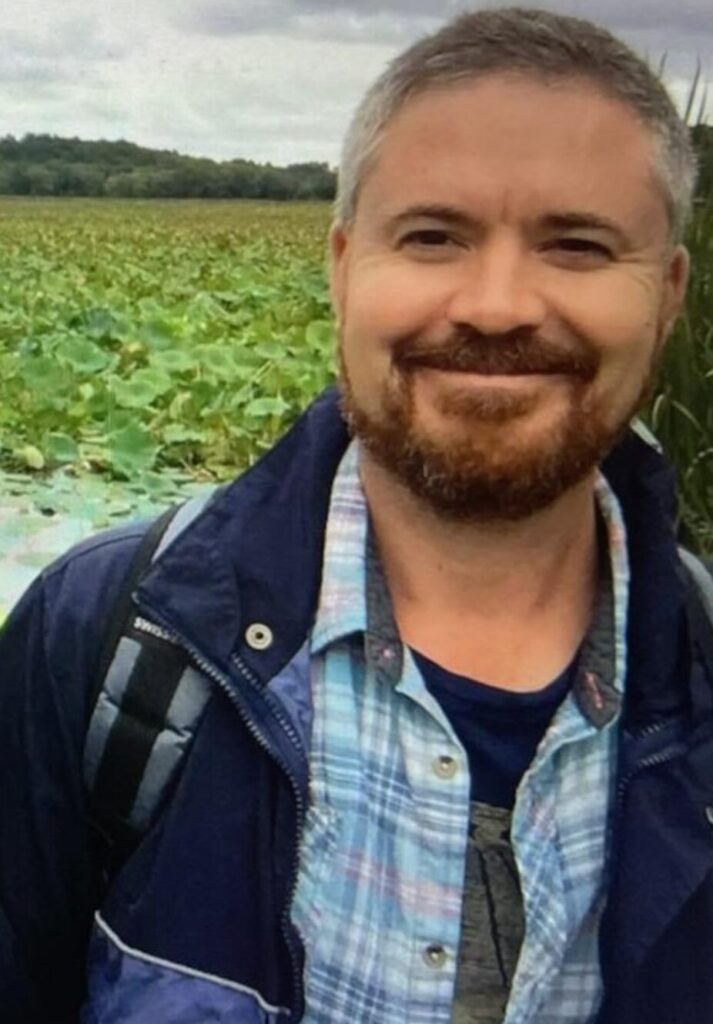
The founder of OBS, Steve Ecrement, is a Certified Wildlife Biologist® and Professional Wetland Scientist, and has been working in the wildlife and wetlands conservation field for both the private and public sectors since 2003. Steve has an Associate of Science degree in Wildlife Management from Hocking College, a Bachelor of Arts degree in Geography from Humboldt State University, and a Master of Science degree in Environmental Studies from Ohio University, several peer-reviewed publications, and received training in beaver management techniques under the professional guidance of The Beaver Institute.
Steve’s professional career has focused on reptile and amphibian research, habitat enhancement, and endangered species monitoring and management, with a primary interest in freshwater ecosystems. Having worked in freshwater systems throughout the country for most of his career, Steve recognized the importance of beaver-created habitat early on, particularly high biodiversity. Steve has advocated for alternative Beaver Management methods throughout his career when issues were presented by public and private landowners. After living all over the United States, Steve has settled in his home state of Ohio and started OBS to assist landowners in designing a plan to protect their property and infrastructure from beaver activity, while leaving beavers on the landscape when possible, and protecting this critically important biodiverse wetland habitat.
At Ohio Beaver Strategies, we believe that humans and beaver can coexist.
Vision and Mission Statement
Wildlife professionals using ethical management strategies to resolve human-beaver conflicts.
Protecting property, infrastructure, and other human interests, while preserving the economic and ecologically beneficial functions resulting from beaver activity. Using well-established methods to settle human-beaver conflicts for successful, long-term, cost-effective coexistence.
Values
Ohio Beaver Strategies seeks to protect infrastructure and property essential to society, while avoiding unnecessary harm to wildlife or valuable ecosystems, by working with nature, not against nature